
Maria Konnilova writes in The New Yorker magazine, “Resilience presents a challenge for psychologists. Whether you can be said to have it or not largely depends not on any particular psychological test but on the way your life unfolds. If you are lucky enough to never experience any sort of adversity, we won’t know how resilient you are. It’s only when you’re faced with obstacles, stress, and other environmental threats that resilience, or the lack of it, emerges: Do you succumb or do you surmount?” Read her Article
How People Become Resilient
Meditation, Aerobic Exercise Combo Cuts Depression by 40 Percent
A new study has found that following two sessions combining meditation and aerobic exercise per week for two months can reduce the symptoms of depression by 40 percent. Read the News
Depression Screening for All?
From National Public Radio‘s program, “On Point with Tom Ashbrook,” a great conversation with experts about a new national task force’s recommendation that says everyone should be screened for depression. Listen to the Podcast
Chronic Stress Could Lead to Depression and Dementia, Scientist Warn
A major review of published research suggests that chronic stress and anxiety can damage areas of the brain involved in emotional responses, thinking and memory, leading to depression and even Alzheimer’s disease. Read the News
Major Depression Linked to Disruption of Brain’s Emotional Networks
Different regions of our brain need to work simultaneously in order for us to process emotion. But according to new research, such regions are disconnected among individuals who experience multiple episodes of major depression. Read the News
Liz Swados’ Journey Through Depression
If you’ve ever suffered from depression, you know what a dark muck it can be. Helpless and hopeless, this deadened state leaves people at the bottom of a dank well with no ladder out.
I’ve gone through major depression. I count myself one of the 20 million in this country so afflicted. I’ve gotten to know so many fellow sufferers over the years. One I didn’t get the chance to meet, to my great chagrin, was author, composter and Tony-nominated playwright Liz Swados. We had a few things in common – we both grew up in Buffalo (she left for a theater career in NYC years ago and I’m still here), a lawyer connection (her dad was one and I’m currently one) and we both struggled with depression on and off during our lives.
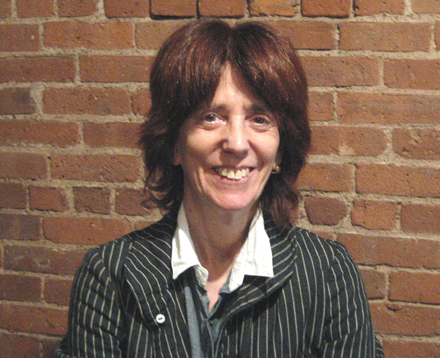
Sadly, Liz died on January 5, 2016 of cancer at the age of 64 before I had the chance to meet her.
If you not aware of Liz’s work, you should be. She’s the author of the book, My Depression: A Picture Book.
The book is a memoir in words and pictures of Liz’s journey through depression that is by turns poignant and funny. Through her whimsical drawings, readers get a unique view of the experience of depression: from the struggle to keep her condition a secret, to the strange effects of ‘new’ drugs, to the small things that can trigger relapses. At its heart, it is a gentle reminder fellow sufferers are not alone and that they can lead a fulfilling and happy life.
She’s also the creator of the brilliant HBO animated film, “My Depression (The Up and Down of It)” that appeared last summer.
Here’s what Liz wrote about the film:
“It takes us through a journey from the beginning of a depression, through the darkest symptoms and searching a person can do to try to find a cure, to discovering small bits of light, be them from anything – chocolate, yoga, therapy, medications… We didn’t come to any brilliant conclusions; we just went by our instincts and experiences. We have been showing it to various audiences and have found that many people identify with it, which is a true pleasure because I wouldn’t want to represent something so sensitive in a wrong way. I’ve received emails and all kinds of communications from people telling me that they feel simpatico with me, and that’s the best: to give someone an identity and a way to be not alone in a very empty, difficult time of life. I think the most important part of the film is the humor. Depression may not be funny to live through, but if you look at it in a certain way, if you look at yourself and others as creatures under some silly dark spell, it can help lift the weight.”
It’s so hard to describe to others who have never been through depression what it’s really like. It’s tough, I think, because they really don’t have a reference point. They’ve been through sadness. But depression isn’t sadness – it’s an illness.
Liz’s book and film have done a lot of good to help others understand and, hopefully, offer more love and support.
But it’s also is a powerful visual journey for those who suffer. It gives voice to an experience that so often, in it’s most miserable manifestations, mutes that voice.
The voice of our truest and most vital selves.
And it does it all with a panache of humor.
Thanks for everything you’ve done Liz and rest in peace.
3 Ways Pessimism About Future Possibilities Fuels Depression
Being pessimistic about your various “possible futures” may cause depression. Read the Blog
Inflammation Can Fan The Flames Of Depression
A new study from Rice University finds that chronic inflammation in the bloodstream can ‘fan the flames’ of depression, much like throwing gasoline on a fire, according to a new paper. Read the News
Ketamine and Depression: Too Much, Too Soon?
Any new drug that might work faster and have fewer side effects is jumped on by researchers and clinicians alike. The latest drug, heralded by some as a new wonder drug for depression, is ketamine. But should we roll out it out as a fix for depression? Read the News
“Plop, Plop, Fizz, Fizz” – Oh, What a Relief it is? Our Relationship with Antidepressants

Most folks with depression have a complicated relationship with their antidepressant medications.
I certainly do.
While these pills saved my life years ago when major depression struck, years later, I often wonder if I still need to take them, or, if they’re still effective.
If I feel tired and flat on a particular afternoon, is it depression, the side effects of my meds or a jumble of both? Or maybe, it’s just my persistently pensive nature?
I think about this a lot these days – and maybe you do as well.
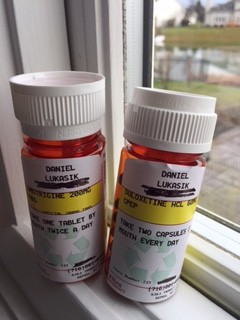
While the one-two punch of Cymbalta and Lamictal have kept me out of the dungeon of major depression for years, its comes with a cost. I have interludes of passivity, numbness, and fatigue. Maybe a low-grade depression at times, as well. If I ditch the drugs, maybe I will feel more “alive,” I think. I fantasize that cutting my ties with meds could lessen the days lost to the deadening grayness of a medically induced sense of normalcy I sometimes go through.
But I also feel anxiety. If I went cold turkey and lived medication-free, would it end, well, in disaster? A return to the swampland of depression? A deadman’s land if ever there was one. Can I take that chance? Should I?
There’s scary research that suggests once you stop antidepressants that work (or sort-of-work) for you and try to go back on the same ones because being off of them caused your depression to return (or you just couldn’t tolerate the horrible side effects that can come with discontinuation), there’s a good chance they won’t be as effective.
So, what’s a depressed person supposed to do? What should I do?
There are two camps that offer some guidance on this issue. Both have persuasive arguments about why those afflicted should or shouldn’t stay on meds.
The Stay on the Meds Camp
If depression is an “illness,” like diabetes or heart disease, I need these meds to balance out my of whacky neurochemistry. Given my risk factors: a family history of depression (genetics), a crazy childhood with a nutty, abusive and alcoholic father, and a high-pressure job with too much stress, I should stay on the pills.
In his insightful essay in the New York Times, In Defense of Antidepressants, psychiatrist, Peter Kramer, author of the best-selling books, Listening to Prozac and Against Depression, suggest that studies show this: for mild or moderate depression, talk-therapy is as or more effective that medication. But for the Moby Dick sized sucker called Major Depression? Medications are warranted, and, indeed, lifesavers. They help many to function and live productive lives, albeit with a range of mild to more severe side effects.
The Get off the Meds Camp
Some people (including psychiatrists) see meds as the devil’s handiwork: supposed chemical solutions to emotional problems that flat-out don’t work. Many psychiatrists’ (and family doctors who write the overwhelming majority of scripts for these drugs in the U.S.), they maintain, are “pill pushers” who do the bidding of “BigPharma”, a multi-billion dollar industry in this country. Antidepressants aren’t so much a cure as a curse.
Irving Kirsh, Ph.D., author of The Emperor’s New Drugs: Exploding the Antidepressant Myth, writes:
“Putting all [the research] together leads to the conclusion that the relatively small difference between drugs and placebos might not be a real drug effect at all. Instead, it might be an enhanced placebo effect, produced by the fact that some patients have broken [the] blind and have come to realize whether they were given drug or placebo. If this is the case, then there is no real antidepressant drug effect at all. Rather than comparing placebo to drug, we have been comparing ‘regular’ placebos to ‘extra-strength’ placebos.”
The remedy from this group? Psychotherapy. They see depression as the result of off-kiltered, negative thinking patterns. The way out of these ruminative, pessimistic thoughts involves working with a therapist who uses, most often, Cognitive Behavioral Therapy, to challenge and encourage patients to replace such thoughts with more realistic and positive ones.
In his book Undoing Depression: What Therapy Doesn’t Teach You and Medication Can’t Give You, Richard O’Connor, Ph.D. argues that both therapy and medication are effective, but limited in certain respects. He advocates an additional factor often overlooked in depression recovery: our own habits. Unwittingly we get good at depression. We learn how to hide it, how to work around it. We may even achieve great things, but with constant struggle rather than satisfaction. Relying on these methods to make it through each day, we deprive ourselves of true recovery, of deep joy and healthy emotion.
The book teaches us how to replace depressive patterns with a new and more effective set of skills. We already know how to “do” depression-and we can learn how to undo it.
Some Recent News on the Meds and Therapy Conundum
The New York Times reports that a large, multicenter study by Dr. Charles Nemeroff, then a professor of psychiatry at Emory and now at the University of Miami, found that for depressed adults without a history of abuse, there was a clear ranking order of treatment efficacy: Combined psychotherapy (using a form of cognitive behavior therapy) and an antidepressant (in this case, Serzone) was superior to either treatment alone. But for those who had a history of childhood trauma, the results were strikingly different: 48 percent of these patients achieved remission with psychotherapy alone, but only 33 percent of these patients responded to an antidepressant alone. The combination of psychotherapy and a drug was not significantly better than psychotherapy alone.
So what’s a depressed person supposed to do?
I don’t know, really.
We’re in a pickle, aren’t we?
Maybe there’ll be a soon-to-be discovered test that can guide us on precisely what to do. But for now, many of us will stay-the-course and, for better or worse, stick to the “plop, plop, fizz, fix”.
I see myself somewhere in the middle of all this. I’ve never been hospitalized or tried to commit suicide. But I have known depression’s scorching winds, gales that have torn the flesh from my body. I will never forget this pain. It’s scarred me. And I never want to return to it.
If you’re thinking of discontinuing your meds, here’s a great article on how to do it safely.
I welcome your comments about your depression journey with or without medicaton.
Copyright, 2017
by Daniel T. Lukasik
Featured In:








Built by Staple Creative